
Four Implications Of The Phase 3 Cancer Vaccine Results
By Devan Shah
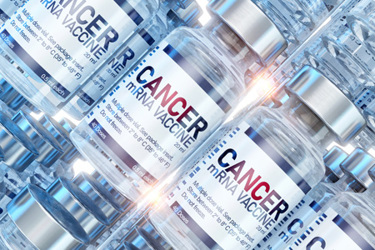
Merck and Moderna announced positive Phase 3 results this month for their personalized mRNA cancer vaccine in melanoma. Not a cure. Not even close — these patients were in remission in an adjuvant setting, so what this shows is proof, at scale, of preventing recurrence.
That's a narrower claim than most of the coverage implied, and it's still a big step forward for mRNA and cancer vaccines as a field.
The vaccine, intismeran autogene, combined with Keytruda (pembrolizumab), met its primary endpoint and key secondary endpoint in high-risk melanoma patients whose tumors had been completely removed. The combination improved recurrence free survival ("RFS") and distant metastasis free survival ("DMFS") versus Keytruda alone.
For anyone building or investing in oncology, the more useful question is which of your working assumptions this result breaks. A few thoughts on that.
Phase 3 Moves The Burden Of Proof
There have been a long string of cancer vaccine failures over the last two decades, hence the earned skepticism from the establishment community. But the default assumption that this class doesn't work, with the burden sitting on anyone claiming otherwise, is hard to hold onto after a randomized, registrational-scale readout. The burden hasn't disappeared so much as moved, and the arguments from here will be about magnitude, durability, and breadth rather than mechanism.
We still need the full data. We know it hit RFS and DMFS, but not by how much, not how durable the benefit is, and not what happens to Overall Survival ("OS"). Those together will determine how much respect this earns from skeptical oncologists, researchers, and investors, of which there are plenty (Ben Vincent at UNC has a good skeptic's read on this).
Also notable, melanoma is known to have a much higher tumor mutation burden than many other types of cancer, which makes it easier to identify to the immune system compared to other solid tumors, a point William Gibson at Dana-Farber has made well. Renal cell carcinoma looks to be the next key readout, and it's the harder test, because there's less mutational raw material for the platform to work with.
So the question in a pipeline review shifts. Instead of asking whether the class can work at all, you're asking whether a given tumor type presents enough neoantigens for it to work, and what specific evidence a payer is going to want to see.
The market reaction, for what it's worth, was still pretty crazy. Roughly $80-90B of market cap was added in a single day across Moderna, Merck, and ecosystem players like Tempus, and that's against a relatively niche adjuvant population, arguably low 10s of thousands of addressable patients, with economics split 50/50 between the two partners and some analysts projecting $2-3B in peak sales. My read is that very little of that move is about this product, and most of it is the field being repriced.
Manufacturing Speed Is The Bottleneck To Worry About
Personalized vaccines invert the economics that commercial manufacturing groups are built around. There is no batch. Each dose is built from one patient's tumor and germline sequence, and the clock starts at resection.
The instinct is to attack cost first, and I think that's backwards. "Quickly" may be even more important than "cheaply" here, because it's ideal to administer these therapies while the patient is somewhat healthy and has a revived immune system, as opposed to when they're actively battling cancer and their immune cells are worn down. A patient dosed a few weeks after surgery is a meaningfully different biological starting point than the same patient six months later. Turnaround time is doing real clinical work in this modality, well beyond what shows up in a cost model.
It's also a chain rather than a single step. Sequencing, variant calling, target selection, synthesis, fill finish, release testing, and shipping each carry their own queue time and the patient experiences the sum, so shaving days off synthesis doesn't help much if the sequencing vendor sits on the sample for two weeks.
Moderna, to their credit, has invested a lot in streamlining this. The broader CDMO (contract development and manufacturing organization) industry has not, and my guess is that many of them will struggle. Contract manufacturers are optimized for scale, batch economics, and campaign planning, which is roughly the opposite of what an N-of-1 product with a clinical deadline needs.
Practically, that means putting turnaround time into your target product profile as a clinical assumption rather than a cost line to optimize later, and asking manufacturing partners for cycle time commitments alongside capacity commitments.
The Vaccines Themselves Are Still Highly Inefficient
This is the encouraging part, for anyone who thinks they missed the window here.
Only a small (~1-10%) fraction of encoded neoantigens ultimately translate into the HLA presentation you want on Antigen Presenting Cells ("APCs", like the dendritic cells that educate your soldier T cells to go out and find and kill cancer cells). Everything else is wasted payload. The Phase 3 result was achieved anyway, at that conversion ratio. The analogy I would use is "throwing things at a wall to see what sticks" but it's rough because there is some intelligence in the antigen selection here, albeit the immunology is complex and far from being mastered.
Antigen/payload selection is perhaps the highest leverage problem in the field right now. Better prediction of which mutations actually get processed, presented and recognized should improve outcomes without changing the modality at all. From what I can tell, what Moderna has been using in collaboration with Personalis is not the most sophisticated AI but is still machine learning of some sort. One can imagine that with much more relevant input data and more sophisticated algorithms, results improve further.
That's the narrative pulling tech investors into oncology, and they like it considerably more than traditional biotech investors do; traditional investors will wait to see more trial readouts and empirical evidence.
Personalization also isn't the only lever available. At RNAV8 Bio we're working on some synergistic, non-personalized immune stimulating payloads, on the theory that raising the efficiency of the response may prove more tractable than perfecting the target list. The problem is that immunology is incredibly complex and the path isn't obvious, though there are several smart approaches being undertaken. Many theories abound.
MRD, Surgery And Immunotherapy Are Pulling Oncology Upstream
The fourth implication is the biggest, and it isn't really about vaccines.
Liquid biopsies are getting better at detecting cancer earlier (at least for subtypes of colorectal cancer and lung cancer) as well as at monitoring treatment progression, or the fancier term, Minimal Residual Disease ("MRD"). Meanwhile cancer vaccines and checkpoint inhibitors are creating ways to potentially intervene earlier with a seemingly tolerable safety profile. Combine those advances with "old-school" surgical excision and you can imagine oncology increasingly moving upstream: detect cancer when tumor burden is low, remove what you can, then use the immune system to target what remains. This is great for patients.
It also has consequences well past any single product. Diagnostics start functioning as treatment triggers rather than staging tools, which changes who owns the patient relationship. RFS and DMFS become commercially meaningful endpoints rather than academic ones. Trial designs shift toward MRD defined populations, which are smaller, better characterized, and faster to read out. And companies with no vaccine program at all, sequencing providers, MRD assay developers, and surgical oncology networks end up inside the value chain.
If your strategic plan assumes oncology's center of gravity stays in metastatic disease, I'd revisit that assumption sooner rather than later.
A Roadster Moment
None of which means the category is ready. Manufacturing costs, turnaround times, and logistics are still significant constraints. There is already meaningful out-of-pocket demand for personalized cancer vaccines among individuals who can afford to pay, which we see at RNAV8 Bio, and eventually I could see this becoming a broader cash pay category of medicine. We are nowhere near that today.
I think of this as a Tesla Roadster / Uber Black inception moment for cancer vaccines. Expensive, operationally difficult, and accessible to relatively few people, for now, but potentially an early version of something that becomes much larger and more accessible over time (e.g. Tesla Model 3 or Uber X). Whether it gets there depends less on immunology than on execution: better targets, faster manufacturing, and diagnostics that find disease early enough to matter.
So cancer isn't solved. But personalized cancer vaccines just got their strongest validation yet, and that is going to bring a lot more life into the field and RNA's role in it.
About The Author:
 Devan Shah is founder and chief executive officer of RNAV8 Bio, an mRNA and tLNP engineering company developing personalized and non-personalized therapeutics with partners across biotech, big pharma, government, and academia. RNAV8 Bio enhances the therapeutic window of mRNA through longer half-life, higher expression, cell-specific logic gates, and also targeting moieties for non-liver delivery of mRNA medicines across every major mechanism of action in the field. The company was recently selected for an ARPA-H award to develop programmable, drug-tunable RNA medicines with the Rouskin Lab at Harvard Medical School and the Weissman Lab at MIT/Whitehead Institute under the PROPEL program.