
The Bond Factor: Resilience Through Change
By Wanda Shoer
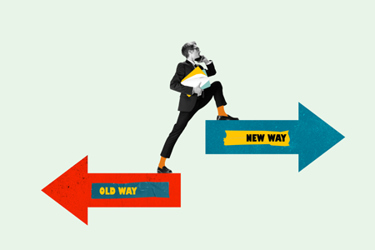
Most of us have lived through more change than we give ourselves credit for. We moved from elementary school to middle school, left home for college or a first job, got married, became parents, and bought a first home. Each of those moves required us to leave something familiar behind and find our footing somewhere new. Yet when change arrives at work, it can be easy to forget just how capable we already are at navigating it.
This is the final piece in my series on the Bond Factor, a leadership framework built on three principles of adaptability, relationship building, and resilience. The first piece focused on the bond with self. The second explored building the relationships that bond us to others. This final piece is about our bond with the journey and the resilience to trust the path as it unfolds.
Knowing When To Move On
I define resilience as the judgment to know when to persevere, when to adapt, when to recalibrate, and when to find a new direction. Sometimes that means pushing through a hard challenge. Sometimes it means recognizing you have learned what you needed to learn and it is time to move forward.
One of the harder lessons I have learned is that resilience also requires letting go. We cannot control every outcome, solve every problem, or carry every part of the journey. There are times we have to trust what we know, trust what we have learned along the way, and allow the way ahead to reveal itself.
During periods of change, I also try to ask a different question. Instead of focusing only on what is happening or where it will lead, I ask: Who am I becoming through this process? Change asks something of us. It can challenge what we know, what we hold onto, and how much certainty we need before taking the next step. Resilience is not only about getting through what is changing. It is also about paying attention to how the experience is changing us.
Why Change At Work Feels Harder
Organizations are asking people to absorb more change than ever. Gartner found the average employee experienced 10 planned enterprise changes in 2022, up from two in 2016, and many people are worn down by the pace.
Work also takes up more of our lives than it used to. My parents never brought work home or made it a family conversation. For them, the job was the job, and it gave the family a steady anchor. My children see me working and traveling, and my daughter was a toddler during the pandemic who sat on my lap during meetings. To her, my workspace has always been part of home. Microsoft's Work Trend Index shows how common this is, with meetings after 8 p.m. up 16% in a year and the average employee handling more than 50 messages outside core hours.
When work absorbs that much of our lives, change at work feels personal. Yet the resilience we draw on so naturally in our personal lives does not disappear when we walk into work. We are the same people, with the same capacity to adapt, learn, let go, and begin again.
Letting Go Of The Old Car
For years, every time my car lease ended, I got the exact same model because I was comfortable in it. When it was finally time for something different, I got a new car but kept the old one in the driveway and refused to drive the new one. I wasn’t ready to let go of what I knew. Once I made the switch, I loved the new car. Within weeks, I could barely remember what it felt like to drive the old one.
My work centers on change and transformation, and I see that same attachment all the time. Much of the resistance I run into comes from people holding on to the way things used to be. Resilience helps them sort out which parts of the old way are worth carrying forward and which parts need to evolve. Once they can see that, they have a say in how the change unfolds.
I saw the same attachment in a large-scale transformation I led. We were asking people to leave ways of working they knew well and move toward a new model. Many were understandably hesitant. They worried about what they might lose and questioned how the change would help them. Over time, that new model became familiar too. When we eventually began evaluating what needed to evolve, many of those same people were reluctant to part with it.
I am careful never to change something for its own sake. After any shift, I ask whether the new way of working is delivering what we need, and if it isn't, we adjust.
Build It With Others
Leaders get so focused on executing the plan that they forget to listen. What we interpret as resistance is often people trying to understand what the change means for them. What am I losing? What will stay the same? Where do I fit? Taking time to hear those questions helps people find their place in the change.
People move through those adjustments more easily when they have a voice in shaping them, rather than feeling like it is happening to them. Gartner research shows change success increases by 24% when employees own implementation planning. Bringing people into the process gives them a reason to trust the journey.
Listening can also make the change better. Earlier in my career, on teams carrying out large transformations, I saw work get orphaned because nobody had given it a home. The people closest to the work often see what leaders cannot. When there is enough trust for them to speak up, they surface gaps, challenge assumptions, and help build a stronger plan.
Take a Moment To Reflect
Before the next change reaches your team, take time with these questions:
- What have I already navigated that reminds me I can navigate this too?
- What about this change is hardest for me to let go of, and why?
- What are others telling me that I have not taken the time to truly hear?
- What am I trying to control that I may need to release?
- How can I participate in shaping what comes next rather than simply reacting to it?
- What kind of leader am I ready to become?
Each of us carries more resilience than we recognize. The bond we form with ourselves helps us trust what we know. The bonds we build with others remind us we do not face change alone. And the bond with the journey allows us to let go of what was, trust the path as it unfolds, and remain open to who we are becoming along the way. Perhaps that is the real work of resilience: not simply getting through change, but allowing it to teach us what to carry forward, what to leave behind, and who we are ready to become.
About The Author:
 Wanda Shoer is the incoming Chief People Officer at Phoenix Children’s, bringing more than 20 years of experience leading organizational transformation, business strategy, and talent development. Most recently, she served as Chief Learning Officer at Sanofi, where she led the transformation of learning across the global enterprise. Her career spans leadership roles at Johnson & Johnson, Sanofi, and in consulting, with experience across human resources, business operations, technology, and organizational change. Throughout her career, Wanda has focused on building organizations where people and businesses can thrive.