
A Serial Biotech Entrepreneur's Recipe For Success
By David Hung, M.D.
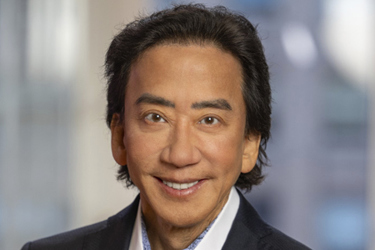
Here’s my thesis: biotech remains one of the most exciting and promising industries in the world, driven by the inescapable reality that nothing matters more than our health. Despite the fact that in recent years external macroeconomic forces — like the pandemic, economic shifts in focus away from biotech, and rising interest rates — have added strain and tested the resilience of those working in the healthcare sector, there is still no better business to be in.
After nearly three decades in biotech, I’m more optimistic than ever. Incredible advances in science and medicine are being made every day and are primed to continue for the foreseeable future. As Nuvation Bio comes off the FDA approval of our first lung cancer drug and positions itself for the future, I’m reflecting on some of the learnings over my career to date. I hope these reflections will help inspire others to pursue their own paths and build organizations rooted in creating meaningful benefits for people who are suffering from the ubiquitous and inescapable scourge of human illness.
Stay Curious, Creative, And Open
Scientific curiosity is often what prompts people to go into medicine. I certainly attribute many of my professional successes to my lifelong curiosity about how science can be harnessed to help people. Staying open to new ideas and trying to apply insights across disciplines, some seemingly completely unrelated, can lead to meaningful, even game-changing, results. In my first startup, we pioneered ductal lavage to flush out breast epithelial cells from breast milk ducts for the early detection of cellular atypia. It was my understanding of fluid dynamics and the differences in the speed of water flow between the sides and middle of a river from my many days spent flyfishing that allowed me to invent a micro-catheter that ultimately received FDA clearance for the first “Pap smear”-like technology in women at high risk for breast cancer.
I’ve seen firsthand that truly novel insights may come as realizations over time or as “ah ha!” moments when you least expect them. Some years ago, I had an “ah ha” idea for a novel mechanism for a cancer drug while I was literally taking a shower. Antibody-drug conjugates have been an important advance for many cancer types but can suffer limitations due to their size and complexity of manufacture. So, I thought there might be a way to fuse two or more small molecules together to make drug-drug conjugates (DDCs) to hit cancer cells in new ways –— making them smaller to improve tumor penetration and potentially even target sub-cellular compartments to kill cancer cells more effectively. Of course, it took a lot of extremely complex chemistry and trial and error to make the concept a reality, but this novel approach has become a key platform technology in our pipeline that has shown highly intriguing and promising signals in early clinical trials.
Stay Grounded: Don’t Drink Your Own Kool-Aid
Many in biopharma have a deep drive to do something meaningful, myself included. However, so many entrepreneurs want so badly to accomplish something and be successful that sometimes they succumb to wishful thinking and are not as objective about their technology or business strategy as they probably should be. And because biotech is so capital-dependent, the necessity of pitching and wowing investors to get them to drink the Kool-Aid is a reality of our business. However, this mentality sometimes leads entrepreneurs to drink their own Kool-Aid. I frequently see this leading to a lack of sufficient self-critical rigor in analysis, or a reluctance to see, acknowledge, or envision pitfalls ahead. Having done two basic science post-doctoral fellowships in addition to my three clinical fellowships in hematology, oncology, and transfusion medicine under highly critical academic mentors, I developed perhaps a harsher approach to technology evaluation early in my scientific training, which has carried over into my business career. I’ve always said that I am absolutely passionate about science, medicine, and my business. But I am coldly dispassionate about my data. Nothing wastes more time and money than going down a wrong path that might have been recognized with more objectivity.
While coldly objective analysis is essential to selecting technologies more likely to work and developing business plans that are grounded and feasible, there’s a flip side where paralysis by analysis also can lead to a failure to launch. While an entrepreneur must select a technology and business model that will succeed, it is essential to avoid letting perfect stand in the way of great, or even good. A business that could have been but that never launches is just another form of failure. It's a delicate equilibrium that needs to be calibrated on a regular basis.
Don’t Get (Too Far) Over Your Skis
For many leaders, rapid business growth is the ultimate dream, understandably. But in biotech particularly, when on one hand development is long and costly and outcomes uncertain, but on the other hand positive outcomes are highly lucrative, this is a double-edged sword. Expanding too slowly or investing too little in a program that would have ultimately been successful is an opportunity lost. But expanding too quickly, through accelerated hiring or infrastructure growth, can overstretch resources and create unnecessary instability or even outright failure from inadequate capital if unexpected challenges arise. Figuring out the right balance in growing faster versus slower is a judgement call based on real-time analysis of often extremely early data, making a prediction about the likelihood and timing of achieving important value-inflecting milestones, understanding the mood and direction of capital markets and their accessibility, and an assessment of the capability and needs of your organization.
My advice is this: stay nimble, push as far as the data justify while mitigating risks, and only grow when the stars align sufficiently and the risk-reward profile suggests the timing is right.
Build A Navy SEAL-Level Team By Giving People The Space To Excel And The Structure To Bond
I’m a firm believer in the power of teams and strongly believe that decisions made collectively by the best teams are almost always better than those made by one individual. Biotech is too complex to think that the best knowledge, experience, and decision-making capability resides in one person. I hire the smartest people that I can find and let them do their jobs without looking over their shoulders.
An important addition to this strategy is putting structures in place in which people can form bonds. When it comes to growing a company, I’ve found the more “human” elements, like esprit de corps, motivation, and connection, are just as important as clinical and scientific ones. I’ve had a long fascination with elite military teams. Elite teams like the Navy SEALs or Army Rangers train for many years, not just to improve their combat and technical skills, but to build the bonds that serve them in times of crisis. Bonded teams in any profession function efficiently and seamlessly, in both calm and calamitous times.
At Medivation, when my company had grown to about 20 people, I had the sense that staff members weren’t as connected as they could or should be, so I put in place mandatory one-on-one coffee chats. Every week, our employees were asked to take a colleague out for coffee to branch out and get more acquainted with one another. When we reached 60 people and one-on-one coffee chats became logistically cumbersome, I set up a mandatory monthly lunch for six, where six employees were randomly assigned to go out to lunch, share personal backgrounds and talk about what they do and the issues they were facing. There's something innate about breaking bread with people that fosters connection, and fun! While many of these lunches resulted in cross-functional insights that led to improved solutions to issues that might have otherwise been missed, these chats also turned out to be great for employee cohesion. Our team members formed real and lasting bonds that continue to this day. And because bonded staff are more agile in almost any kind of corporate decision or pivotal moment, these opportunities always pay dividends for companies as they grow.
Gearing Up For An Exciting Future
To me, biotech is among the most exciting, fascinating, valuable, and fun industries imaginable, and its potential is only mounting. Biotech may always be a little unpredictable, but it also offers limitless possibilities to truly change the world and the human condition. I cannot think of any career that’s more gratifying, and I feel so grateful to have been given the opportunity to lead the teams I’ve led and care for the patients we’ve treated.
About The Author:
David Hung, M.D., is Founder, President, and CEO of Nuvation Bio, where he identified and obtained FDA approval for IBTROZI (taletrectinib) for the treatment of advanced ROS1+ lung cancer. Previously, Dr. Hung identified XTANDI (enzalutamide) for advanced prostate cancer, guiding it from the lab to FDA approval in just seven years; it is now approved as the standard of care for prostate cancer in more than 60 countries. Dr. Hung also developed TALZENNA (talazoparib) in breast and prostate cancer, which led to FDA approval in both indications.