
Five Ways To Unleash The Potential Of Women In STEM
By Lidia Serina, Ph.D.
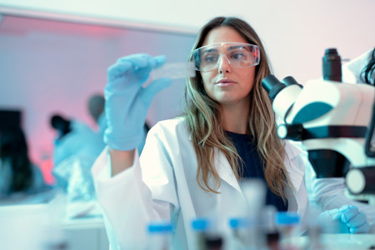
As a woman who has succeeded in the STEM industry — most recently at the independent contract development and manufacturing organization (CDMO), Simtra BioPharma Solutions — I’ve learned much about navigating what is often a complex workplace landscape for women. Giving STEM women the tools they need to map their own course to success is essential for unleashing their potential and retaining their talent in industries in which they are currently under-represented and not fully appreciated.
The numbers clearly demonstrate that there is significant room to expand women’s STEM presence. For example, in 2018, U.S. women earned 53% of STEM college degrees, yet, data from the National Science Foundation show that, in 2021, only 18% of female workers had STEM occupations, compared with 30% of men. Globally, women account for 30% of entry-level STEM workers but only 12% of C-Suite Executives in STEM-related companies. Ensuring that women graduating with STEM degrees continue to rise and thrive in STEM professions requires new ways of thinking within STEM industries and within women ourselves. Here are five lessons I’ve learned in my own career:
1. Progress Is More Important Than Perfection
Women are frequently their own harshest critics. A study conducted with 80 women at STEM institutions across the United States found that 97.5% questioned their abilities to perform their professional duties. A study of 624 software engineers across 26 countries found that significantly more women (61%) than men (49%) frequently doubted their job capabilities. Among 138 U.S. medical students, twice as many women as men intensely felt that they weren’t meeting the demands of their jobs. A study conducted at the Stanford University Graduate School of Business found a confidence gap between women and men who had the same educational degrees and grade point averages. In this study, women had doubts about their capabilities in key career-related areas such as designing, testing, and prototyping new products, despite being as skilled as men.
While self-assessment of our job performance can drive us to improve, unrealistic expectations and constant pursuit of perfection can lead to burn-out and fatigue. Continually questioning our capabilities can make us hesitant to lean into new opportunities that can take our careers to the next level.
Constantly striving for perfection rather than leveraging demonstrated progress can also lead to analysis paralysis, in which the fear of making the wrong decision precludes making any decisions. This slows the pace of progress and can make us appear timid or indecisive in situations that require leadership and action. A decision that moves a project in a positive direction is a good one. As many baseball players have learned, consistently hitting singles or doubles can lead to more wins than swinging for the fences and missing.
2. There’s No Shame In Self-Advocacy
It’s true that there’s no “I” in team, but it’s equally the case that group progress results from an accumulation of individual contributions. From what I have observed over several decades in the biopharmaceutical industry, women are often self-deprecating about the value of their contributions, promoting the team’s accomplishments rather than accepting or claiming recognition for how their actions and ideas contributed to a group’s success. Devaluing ourselves makes it difficult for others to recognize what we bring to the table. Collaborative self-advocacy — an approach in which we recognize the contributions of individuals, including our own — can be an effective way to highlight our achievements and value while remaining a valued team player. It also increases the likelihood that we will be given larger roles to play and provided with more opportunities to demonstrate our value.
Equally as important is not letting others take credit for our work. Clarifying the role we played in a team’s success with a supervisor or manager can be uncomfortable, so it’s important to provide specific examples of your contribution. This also is an area in which STEM companies can improve the playing field for women by basing hiring and promotion decisions on clear evidence of ability rather than on how a job candidate or employee promotes themselves. Taking the time to understand how each team member helped (or, in some cases, hindered) progress is ultimately to a supervisor or manager’s advantage because it allows improved resource utilization and can help to identify skills gaps or overlaps when assigning teams for the next big project.
3. “Boundary” Isn’t A Bad Word
Many self-help guides speak about putting on our own oxygen masks before we help others with theirs. While the metaphor may be slightly overused, it’s one I’ve seen too many STEM women fail to follow — typically to their detriment. We should help and support our co-workers when extra hands or mindshare is needed. However, this help cannot come at the expense of meeting the goals and expectations of our own work.
Establishing and communicating boundaries for when, why, and how we are available to other teams and co-workers is good workplace hygiene. It protects our ability to meet our responsibilities and creates understanding about our roles outside our job descriptions. It also is constructive to our organizations by increasing transparency around staffing and resource utilization. We as individuals should not be the expected solution to institutional or systemic challenges that require additional or alternative personnel.
4. Work-Life Balance Shouldn’t Feel Like A Tightrope
A 2024 Gallup Poll found that more than half of U.S. working women feel more stress than working men, due in large part to challenges balancing work and home-life demands. In my own career I’ve witnessed many more women than men try to juggle their work responsibilities with the needs of children, aging parents, and household jobs. Regardless of their professional titles, many women are the CEOs of their family. Making daily decisions about budgets, resource allocation, and meeting goals for projects at work is demanding enough without simultaneously tracking household spending, who’s driving soccer carpool, and when the baby is due for a wellness checkup.
Here again, establishing and communicating boundaries with work colleagues and family members can be the difference between a busy yet satisfying life and feeling that every aspect of life is a chore. In my own experience, I have found that working with a coach or mentor who can help me prioritize my own needs and the needs of those around me has been tremendously valuable in enabling me to feel fully present with whatever task is at hand. I now coach others who are seeking a work-life balance solution, helping them overcome the fear that a single misstep will leave them in free-fall.
Addressing the work-life balance needs of women in STEM is also good for the STEM industry. The same Gallup poll found that 46% of women who reported feeling stressed a lot of the day were more likely to be actively looking or watching for opportunities to change jobs. Poll results show that only 26% of women respondents strongly believed that their employer cared about their wellbeing. This leaves significant room for improvement. While the poll cites the importance of managers in helping to foster work environments in which women feel comfortable sharing their work-life balance concerns and needs, it also underscores that these environments begin at the upper echelons of organizational leadership. STEM leadership teams must understand and act on the idea that caring for employees is the most effective way to build a workforce that is committed to organizational success. Simply put, take care of your employees and they will take care of you.
5. You Don’t Need To Fake It In Order To Make It
The inability to express ourselves authentically can make it difficult to be fully present and engaged with our work. I’ve been told not to be “too emotional” or that I’m “doing a great job but don’t need to act as tough as a man.” While each of these comments say different things about how I’m expected to behave, both imply that my authentic behavior is somehow wrong. Fortunately, I have always understood that behaving inauthentically to appease someone else’s biases serves their needs rather than my own or those of the task at hand. Holding true to our authentic selves is how we realize the power of our unique perspectives and abilities.
The mind-shift from faking it to thriving isn't a passive journey. It is a conscious reclaiming of our space in the lab and the boardroom. We must stop waiting for permission to feel qualified and start treating our unique perspectives as the scientific assets they truly are. By showing up as our true selves, with all our emotions and imperfections, we aren't just surviving the system; we are rebuilding its foundation. Every time we speak up in a meeting, admit a mistake without apologizing for our existence, or reach back to pull another woman upward, we dismantle the culture that limits women’s potential. We are the evidence that excellence does not require a mask. Our presence is the only proof of belonging we will ever need.
I feel fortunate to work at Simtra, where women in STEM can blaze their own distinct path and are encouraged to forge strong mentoring relationships that help others navigate the STEM landscape successfully.
About The Author:
 Lidia Serina, Ph.D., is head of the Development Services group at Simtra BioPharma Solutions, working closely with clients to develop injectable products and manufacturing processes that consistently deliver a high-quality product to the market. Prior to joining Simtra, Lidia served as Vice President at Lonza AG, where she oversaw a 3,000-employee manufacturing plant responsible for delivering more than 70 products. She has also held leadership positions at Curevac, GlaxoSmithKline, and Sanofi Pasteur.