
Godzilla Vs. The Life Sciences Supply Chain
By Dan Mathews
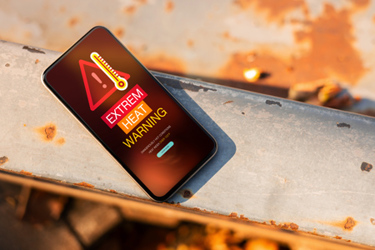
As fans of classic Japanese movies may remember, the pharmaceutical industry has experience with Godzilla. In the 1962 movie King Kong vs Godzilla, Mr Tako, director of Pacific Pharmaceuticals, helps Japan defend herself against the mutant dinosaur by recruiting King Kong to fight him. Unfortunately for the life sciences sector, the predicted 2026 “Godzilla” El Niño event may present an even bigger threat than the monster did — and may need a smarter approach than Mr Tako’s giant gorilla-based strategy.
The risk is real: Meteorologists project an 82% chance that the periodic oceanic heatwave will emerge by mid-2026 and persist into 2027 and may be the most high-impact El Niño event in history. In its wake, 2027 could rank among the hottest years on record — just as 2024 set that record after the last El Niño, augmenting the intensity of floods, typhoons and other extreme weather phenomena. The potential problems looming particularly large for the life sciences sector include major weather disruptions being likely to disproportionately affect key manufacturing geographies in the Asia-Pacific region, including China and India, where the industry’s raw materials and active pharmaceutical ingredients (APIs) sources are concentrated.
Today, India alone holds 48% of the active API filings for US medicines compared with America’s 8%, and itself depends on China for more than 60% of its key starting materials — so the two geographies most exposed to a Godzilla El Niño are the two the entire chain rests on. The link is not abstract: All six Indian droughts since 1980 have fallen in El Niño years, and the 2015–16 event cut Indian grain output by around 2.8%, straining the same water and power that API plants depend on. Meanwhile, droughts may cut off key maritime corridors like the Panama Canal, water scarcity may constrain manufacturing processes dependent on high-quality water, and storms may cripple shipping lanes and close ports.
The downstream consequences will not be limited to inevitably mounting logistical costs and energy bills. The industry can also expect an increased risk of spoiled inventory as delays and disruptions impact its global cold chains, clinical trial delays as API shortages stretch development timelines, and asset damage and production shortfalls sapping its cash flow. Temperature excursions already cost the industry an estimated $35 billion a year, and a deviation of just 1°C to 2°C can destroy biologics, which now comprise roughly 30% of total drug sales, or some $326 billion.1
We have seen a smaller version of this before. When Hurricane Maria tore through Puerto Rico in 2017, it crippled a single concentrated manufacturing hub — and the FDA warned of potential shortages across some 40 critical medicines. No drug or device maker on the island was running above 70% capacity, triggering a national shortage of IV saline at the height of a severe flu season. B. Braun alone later committed $1 billion to new capacity, and the shortages still dragged on nearly two years later: one storm, one hub, a years-long ripple.2
From Freakish To Frequent
As these impacts land, we can expect the industry to pull the usual levers to limit the effects: buffering inventories with increased stock levels; diversifying the supplier base and aiming to reduce exposure to higher-risk geographies; investing in greater digital surveillance to better track supply and improve detection of temperature excursions and other dangers; and, of course, taking out higher levels of insurance.
But this familiar and reactive approach to risk management is not enough. The headlines treat El Niño as a one-off giant menace we must face. But in in reality, today the extreme is becoming the everyday. It’s not just that this oceanic heatwave is coming hot on the heels of a worldwide pandemic, global conflicts, and general political and economic turmoil — it’s also that major climate events themselves are becoming not so much freakish as frequent. These aren’t standalone supply chain shocks but a continuous series of crises rapidly reshaping the industry’s new operational realities.
Not only on the supply side but also in terms of demand: across the world, flooding is changing the epidemiology of waterborne diseases, and ecological instability is accelerating the breakout of infectious pathogens from their established niches, while the shifting climate causes heat-related and respiratory diseases to spike upwards. The pattern is already measurable. One 2025 study attributes 63% of the variation in dengue cases to the El Niño–Southern Oscillation, and estimates the last event alone drove an extra 9.6 million cases. The Americas recorded over 13 million cases in 2024, triple the previous record. Tellingly, these outbreaks tend to follow El Niño by five to six months: a demand shock you can forecast.3
Operational Planning For Adverse Weather Events
In the world we’re moving into, climate intelligence may become a strategic capability. As policymakers increasingly focus on ensuring supply robustness, companies will need to demonstrate they can maintain supply continuity under projected climate stress — and, for the first time, we have the tools to achieve this. These scenarios matter precisely because El Niño is not deterministic. The strong 1997–98 event spared India’s monsoon, while a merely moderate one in 2002 brought one of its worst droughts on record. Resilience means planning across the range, not betting on a single forecast.4 With the immense analytical power of AI at our disposal, we believe the weather can realistically become an operational planning input, rather than a force majeure footnote.
With AI-driven scenarios, we can start looking deeper than each successive wave of supply chain challenges, to discern the bigger risks lurking beneath. We may not have King Kong in our corner, but brute force is insignificant next to the power of forecasting. We have big data and big computing power, and with the accelerating advance of AI, we now have a bigger opportunity: to protect and promote global human health as we move from an era of one-off threats to an age of continuous monster management.
About The Author:
 Dan Mathews is EY’s Global Life Sciences Leader, and advises life sciences companies on delivering better patient outcomes in the most efficient and effective way that can mutually benefit companies, payors, providers and patients. Prior to joining EY, Dan held leadership roles at a major pharmaceutical company and the UK's National Health Service (NHS).
The views reflected in this article are the views of the author and do not necessarily reflect the views of the global EY organization or its member firms.
- Industry estimate of cold-chain temperature-excursion losses (IQVIA / Biopharma Cold Chain Logistics Survey; Mordor Intelligence, 2025).
- U.S. FDA statements and BioPharma Dive / MedTech Dive reporting on Hurricane Maria IV-fluid and drug shortages, 2017–2019.
- Nature Communications, “Rising dengue risk with increasing El Niño–Southern Oscillation amplitude and teleconnections” (2025); PAHO / WHO 2024 dengue figures.
- Historical ENSO records; the role of the Indian Ocean Dipole in modulating El Niño’s monsoon impact (1997–98 vs. 2002).