
The Fatal Flaw In Pharma's Multi-Million Supply Chain Tech Upgrades
By Martin Rode
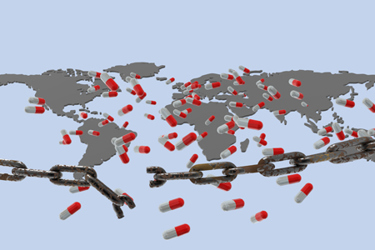
The global pharmaceutical supply chain has been under intense scrutiny since the COVID-19 pandemic exposed its heavy reliance on concentrated Active Pharmaceutical Ingredient (API) manufacturing hubs. During this time, global trade shrank rapidly, with foreign direct investment plummeting by nearly 50%, and the global pandemic proved that supply chains designed for efficiency are often the most fragile.
In response, life sciences companies have accelerated investment in digital transformation, with AI-driven risk monitoring, end-to-end visibility platforms and digital supply chain twins introduced to strengthen resilience.
But tech alone isn’t solving the problem.
Despite significant investment, many of the same vulnerabilities continue to persist, as organizations continue to prioritize efficiency and cost control over structural resilience.
Pharma supply chains need to evolve beyond treating resilience as a system upgrade. Lasting change requires a real shift in leadership approach, where supplier diversification, risk management, and long-term stability are embedded into strategic decision-making, not sidelined by short-term performance metrics.
Over the past few years, I’ve seen enough supply chain programs across pharma and biotech to recognize a pattern that doesn’t really change, regardless of how advanced the tools become.
The systems have improved. Visibility is faster, the data is more granular and far more accessible than it used to be, and the ability to model disruption has improved significantly. Yet when pressure builds, many organizations still end up reacting in much the same way they did before all of the investment. The same trade-offs appear time and time again. Cost over redundancy, efficiency over flexibility, and short-term performance over long-term stability.
The uncomfortable part is that most organizations already have access to the signals they need. The challenge is not the technology itself, but in what we assume it will do for us. The challenge is whether organizations will maximize insights to actually change how decisions get made.
Seeing More Doesn’t Automatically Change Outcomes
There’s still an assumption in many transformation programs that better visibility will naturally translate into better resilience, but in practice, this link is far less direct.
I’ve sat in discussions where risk platforms clearly flagged upstream concentration issues or dependency clusters, sometimes across multiple tiers of the supply base. Everyone could see the exposure and the issue clearly wasn’t awareness, it was whether the organization was willing to act on what was being seen.
This is where the limitations of technology become apparent. A system can bring a risk to the surface, but it can’t resolve the commercial and regulatory friction that comes with changing supplier strategies, qualifying alternatives, or carrying additional buffer capacity. These decisions sit outside the system.
Therefore, what you end up with, in many cases, is better visibility of fragility without a corresponding shift in the operating decisions that create it. Organizations become better informed about their vulnerabilities without necessarily being better equipped to act on them.
This is an important distinction that’s still not fully rejected in how many supply chain programs are structured.
The Blind Spot Beyond Tier One
One of the most consistent findings in our work around supply chain resilience is how often visibility drops away after the first tier.
Most companies can describe their direct supplier base with reasonable confidence, but fewer can clearly explain where those suppliers are exposed, or what their own upstream dependencies look like in detail.
In pharmaceutical supply chains, that matters more than it might in other industries. Critical materials are often dependent on highly specialized inputs with limited global production capacity. If those inputs are concentrated in a small number of regions or facilities, the risk profile changes significantly, even if the tier-one supplier base appears to be diverse on paper.
Without the deeper mapping, there’s a tendency to underestimate just how quickly a seemingly stable supply chain can tighten under stress.
Efficiency Has A Way Of Quietly Shaping Risk
Most supply chains in this sector are still shaped by efficiency-led performance frameworks. This isn’t unusual, and in many ways it’s understandable given the pressures organizations operate under.
Cost, utilization, and inventory optimization remain central to how many organizations are measured. This is completely justifiable, but over time it also shapes what’s prioritized. Decisions that would improve resilience can start to look misaligned, particularly when their benefits are only visible in scenarios that may or may not happen.
Within the industry, scenarios play out where resilience options are repeatedly discussed but deferred time and time again, because the immediate cost or complexity couldn’t be justified within current planning assumptions. Then a disruption occurs and the conversation shifts very quickly, the same options suddenly become urgent, but by then the options are already limited.
This is not about a lack of foresight or a failure of awareness. It’s a consequence of how decisions are rewarded and prioritized.
Resilience Is Not A System Upgrade
There’s a tendency to frame resilience as something that can be delivered through better systems or more advanced analytics, but that framing is too narrow.
In reality, resilience is built through a series of decisions over time; whether organizations are willing to accept additional complexities in their supplier base; whether they challenge concentration risk before it becomes critical; whether they treat redundancy as part of normal design rather than an exception that needs justification.
These aren’t technology outputs, they’re choices about how supply chains are designed and governed. Technology can support them, and in many cases it should, but it cannot substitute for them.
What Changes In Practice
When I look at organizations that are genuinely more robust during disruption, it’s rarely because they have the most sophisticated digital tools. Instead, it's often because they’ve been willing to confront uncomfortable dependencies before they become critical.
That usually means accepting that efficiency and resilience aren’t always aligned in the short term. It also means recognizing that some risks are more visible once you’re prepared to look beyond your immediate supplier relationships and challenge legacy assumptions that have been in place for years. It’s about being clear where the organization is exposed, not just where it’s visible.
These aren’t easy conversations to have, particularly in environments where margins are under constant pressure, but these decisions are the ones that tend to determine how a supply chain behaves when conditions become unstable and unpredictable.
The pharmaceutical industry has made real progress in how it monitors and understands supply chain risk, but the next step is less about adding another layer of technology and more about ensuring that the readily available insight is actually allowed to influence decisions.
Until this gap is addressed, even the most advanced systems will continue to sit alongside the same structural vulnerabilities they were intended to solve.
About The Author:
 Martin Rode is a Senior Consultant at NIRAS with extensive experience in supply chain, sales leadership, and general management across diverse industrial sectors. He has a proven track record of delivering sustainable solutions and optimizing complex organizational procedures in mainly Europe, and Mexico. Having held key leadership roles ranging from Regional Supply Chain Director to CEO, as well as Captain in the Royal Danish Army, he has successfully guided diverse teams across varied markets while driving operational excellence, stable continuous improvement, and the development of high-performing talent.