
Why Europe's Scientific Edge Still Struggles To Attract Global Capital
By Robert Schickel, Ph.D.

Europe produces extraordinary science. From RNA biology to immunology, many of the breakthroughs shaping modern medicine originate in European labs.
But building a company around that science — turning discovery into a therapy that reaches patients — remains structurally difficult.
The challenge is not innovation. It is the ability to translate that innovation into continuously financed, scalable companies.
I see that firsthand as a founder. Originally from Chicago and now leading NUAgo Therapeutics in Europe, I spend a significant portion of my time not in the lab or with my team, but on planes — traveling between London, New York, San Francisco, Boston, and global investor conferences to secure the capital required to move our work forward.
That reality reflects a broader pattern: strong research output, but persistent bottlenecks in scale up finance, fragmented capital markets, and less consistent access to the specialized, risk-tolerant capital required to build companies at scale.
The Capital Gap Emerges At The Most Critical Stage
The capital gap doesn’t show up at the beginning. It shows up in the middle.
Europe performs well in supporting early-stage innovation. Grants, academic partnerships, and seed funding help get companies off the ground.
But the difficulty begins as companies transition from discovery to development — when they need to fund IND-enabling studies, build teams, and prepare for clinical trials.
This is where the system breaks down: it is a stage-specific capital formation problem.
Early-stage capital is available. Late-stage capital is also available. The constraint sits between Series A through early clinical development, where capital requirements increase and risk remains high.
In the United States, there is a deep and experienced investor base that understands how to finance this phase and continue funding it across multiple rounds. In Europe, that pool is smaller, more fragmented, and less concentrated at scale.
This is not just a funding gap. It is a continuity gap.
Biotech requires repeat investors who can underwrite risk over time, not just seed companies and step back. Without that continuity, companies are forced to rebuild syndicates at each stage, increasing friction and slowing execution.
As a result, founders spend an increasing amount of time outside their home markets, effectively assembling capital across geographies to maintain momentum.
Fragmentation Raises Friction And Lowers Velocity
This challenge is compounded by fragmentation.
Europe is a large scientific region, but not a unified capital market. Capital is distributed across countries, regulatory systems, and investor networks.
For founders, this means navigating multiple legal frameworks, investor expectations, and funding pathways simultaneously. For investors, it introduces complexity that reduces efficiency and expected returns.
It also translates into smaller round sizes, less consistent follow-on participation, and slower capital deployment at the stages where speed matters most.
By contrast, companies in the U.S. often scale within a single, deeper capital market with greater syndicate density and alignment.
That difference directly impacts capital velocity, funding consistency, and the ability to scale efficiently.
Biotech Requires Continuity, Not Episodic Funding
Biotech is built on continuity, not episodic funding.
Development does not happen in discrete steps. It requires sustained investment across long timelines, with capital deployed ahead of value inflection points.
This requires aligned investors who commit capital across multiple stages and maintain position through development.
When funding comes together in fragmented rounds — with different investors, timelines, and risk tolerances — it becomes harder to execute a coherent strategy.
Instead of focusing solely on advancing the science, management teams are forced to continuously re-engage the market and manage financing risk alongside scientific risk.
This is not just inefficient. It directly impacts the pace at which therapies reach patients.
Risk Appetite Shapes What Gets Built
Capital markets shape outcomes.
This is not just a difference in risk tolerance. It reflects how future value is priced and when investors are willing to underwrite it.
In the U.S., biotech investors tend to price future potential earlier, particularly for companies pursuing novel mechanisms or new therapeutic modalities. There is an established base of specialist investors with the expertise to underwrite that risk across development stages.
In Europe, the threshold for validation is often higher before capital is committed, particularly at scale.
Over time, this dynamic influences where value is captured, where companies are listed, and where strategic control resides.
For companies developing next-generation modalities — whether in RNA, cell therapy, or precision oncology — that creates a structural constraint. The more differentiated the science, the harder it is to finance locally.
Global By Necessity, Not By Choice
Operating globally is a necessity, not a strategy.
For many European biotech companies, becoming “global” is required to access the capital needed to scale. Scientific discovery may begin in Europe, but capital often comes from the U.S., and later-stage investors are frequently outside the region.
This shapes fundamental decisions: where to incorporate, where to list, and where to build leadership.
For founders, this means navigating multiple systems simultaneously: scientific, regulatory, and financial.
It adds complexity to an already capital-intensive and high-risk endeavor.
Aligning Capital With Innovation
None of this diminishes the strength of European biotech. The science is world-class. The talent base is deep.
But science alone does not build companies. Capital structure does.
Europe’s scientific edge does attract global capital, but not enough at the stages that matter most for company building. While Europe has substantial pools of capital, a smaller share is consistently allocated to venture and scale-up investment.
The bottleneck is not discovery. It is translation into scalable finance.
Closing that gap requires more than incremental change. It requires deeper pools of specialized capital, stronger continuity across funding stages, and greater alignment between innovation and long-term investment.
Ultimately, this is not about where a company is based.
It is about whether we can move science forward at the pace patients need.
Right now, too many founders are spending as much time chasing capital as advancing breakthroughs. That imbalance is solvable, but only if we recognize it as a structural issue rather than an isolated one.
Patients are waiting and the science is ready. Capital formation needs to catch up.
About The Author:
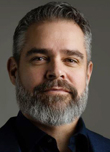 Robert Schickel, Ph.D., is the CEO and cofounder of NUAgo Therapeutics, a biotechnology company developing small RNA-based therapies targeting critical survival gene networks in cancer. With more than 15 years of experience across biotechnology and pharmaceuticals, he has led strategy, business development, and scientific innovation focused on advancing novel therapeutics and therapeutic platforms.
Dr. Schickel combines expertise in translational oncology, company building, and scientific and commercial risk mitigation across multiple stages of development. Prior to founding NUAgo Therapeutics, he advised senior executives of life science companies on corporate strategy, portfolio prioritization, and asset evaluation across a range of therapeutic areas and market opportunities.