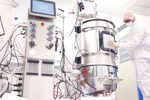




























Harness the power of catalytic continuous flow reactions to achieve safer, greener, and more efficient chemical manufacturing with enhanced scalability and product quality.

ABOUT SK PHARMTECO
At SK pharmteco our mission is to build strong relationships that create happiness for our customers through the shared goal of producing and delivering life-changing therapies that improve patient outcomes and save lives. With our network of seven global, cutting-edge, facilities our capabilities cover the entire product lifecycle, from initial development to commercial manufacturing. We work with customers in a flexible ‘One Team’ approach, prioritizing collaboration, transparency, and trust to make every interaction easy and seamless.
SK pharmteco offers CDMO services for small molecule, Gene therapy, and Analytical testing, contact our experts to learn more!
FEATURED ARTICLES/BLOGS
-

Peptides evolved from early chemical discoveries to transformative therapies, culminating in GLP‑1 drugs that highlight their versatility, precision, and expanding role across modern medicine.
-

Surging demand for highly potent drugs is driven by targeted therapies, stricter containment standards, increased outsourcing, and the need for specialized, compliant manufacturing.
-

View how enzyme-driven reactions accelerate pharmaceutical ingredient manufacturing, improve selectivity, reduce waste, lower costs, and support scalable, sustainable processes under mild conditions.
-

Overcoming development complexity requires robust process safety. Solutions can safely scale challenging reactions, like click chemistry and cryogenic organometallics, improving efficiency and results.
-

Selecting the right GLP-1 peptide manufacturing route determines the specific impurity profile and regulatory strategy. Robust analytical methods are essential for ensuring efficacy and patient safety.
-

Chemical manufacturing must prioritize inherently safer substances to prevent accidents. Adopting greener alternatives improves worker health, lowers costs, and leads to safer products.
-

Gaining real-time visibility into chemical processes helps stop hazardous substance formation. Process monitoring reduces waste, cuts down on reagent use, and optimizes reaction time.
-

True green chemistry minimizes waste and maximizes effectiveness. Catalysis is a key technology for reducing the E-factor and increasing efficiency across industrial and biological synthesis.
-

Design synthetic routes to minimize or eliminate unnecessary temporary blocking groups. This reduces reagent use, yield loss, and waste generation, improving overall process efficiency.
-

Adopting renewable feedstocks is crucial for green chemistry. Innovations using bio-renewable materials can drastically reduce waste, solvent use, and process steps, leading to major benefits.
-

Prevention and design are foundational to green chemistry, requiring foresight to minimize hazards from the start. Reducing reliance on solvents is a critical step toward sustainability.
-

Focusing on solvent management is key to minimizing energy consumption in synthesis. By reducing or replacing solvents, chemists significantly cut both hazardous waste and process energy use.
-

Solvents account for the majority of the environmental impact in chemical synthesis. Consider adopting safer alternatives and implementing reuse strategies to reduce waste, emissions, and toxicity.
-

Discover how deep technical knowledge, unmatched capabilities, and a proven safety culture can help protect your process at every stage.
-

The presence of nitrosamine drug substance-related impurities (NDSRIs) in medications has become an urgent issue for the pharmaceutical industry. Understand the acceptable intake (AI) limits.
-

Chemists should strive to design molecules with the least environmental impact. They can utilize toxicologists and data to apply new metrics and issue guidelines to better assess the safety of chemicals.
-

Lentiviral vector manufacturing is complex and highly regulated, which is why a specialized CDMO is required to ensure safe, scalable, and compliant production from early development to commercialization.
-

Ensure the stability and safety of your drug products by utilizing comprehensive forced degradation and photo-stability testing, guided by ICH and FDA standards, to identify degradation pathways and assess light exposure risks.
-

Chemists and chemical engineers must prioritize sustainable practices by innovating holistic, efficient processes that minimize environmental impact and toxicity, addressing challenges like solvent waste and complex molecule synthesis.
-

Explore our series on key industry advocacy groups to learn how organizations like California Life Sciences (CLS) are driving innovation, fostering growth, and improving patient access in healthcare.
WEBINARS

Overcome adenoviral scale-up challenges with a design-to-scale manufacturing framework that optimizes cell growth, boosts vector productivity, and supports reliable clinical supply.

Learn how lentiviral vector processes evolve for in vivo and ex vivo CAR‑T—covering yield, purity, scalability, and shifting regulatory demands for safe, consistent systemic delivery.
Atropisomers are key to modern small molecule drug development. Learn how advanced manufacturing strategies enable the isolation and scalable production of the most effective single isomer.
Learn the fundamentals of developing a continuous chromatography process with Simulated Moving Bed (SMB) technology for small molecules, from gram-scale to multi-ton commercial production.
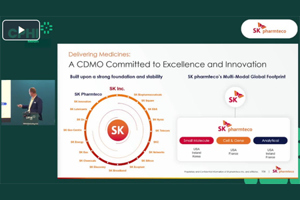
This presentation delves into the critical implications for CDMOs, exploring actionable strategies to bolster API manufacturing capabilities, improve global competitiveness, and support the resilience of European healthcare systems.

Gain critical insights into nitrosamine control strategies, regulatory requirements, and advanced analytical methods to ensure compliance by August 2025.
Explore the pivotal role of cell lines in viral vector manufacturing, a complex, multi-step process that has traditionally been both time-consuming and labor-intensive.
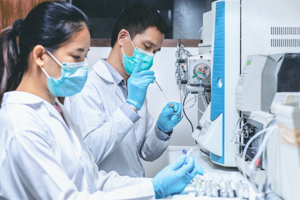
Explore strategies for integrating cutting-edge technologies and optimizing unit operations to expedite the development and manufacturing of cell and gene therapies.
CONTACT INFORMATION
SK pharmteco
12460 Akron St #100
Rancho Cordova, CA 95742
Contact: Liza Rivera
WHITEPAPERS
-

Explore how evolving regulations, supply constraints, and reimbursement models shape GLP-1 drug development across the U.S., Europe, and Asia.
-

Peptide therapeutics from early chemical breakthroughs to today’s metabolic drugs, highlighting scientific, clinical, and manufacturing advances shaping modern drug development.
-

Discover how integrated containment, high-potency expertise, advanced chromatography, and proven linker–payload process optimization can accelerate your ADC program from early development to reliable commercial supply.
-

Discover how scalable, cost-effective, and high-quality lentiviral vector manufacturing can accelerate both ex vivo and emerging in vivo CAR-T therapies.
-

Explore how Simulated Moving Bed (SMB) technology can enhance API production while overcoming common misconceptions about chromatographic purification.
-

Explore regulatory insights, analytical strategies, and real-world case studies for effective nitrosamine control in APIs and drug products.
POSTERS
-
 A Rapid, Scalable Lentiviral Vector Purification Platform
Integrated capture and polishing reduce upstream impurities, enabling high‑capacity polishing, strong lentiviral recovery, and scalable purity for downstream in vivo applications.
-
 Accelerated Yield Optimization Of Affinity Capture
High‑throughput affinity screening shows how buffer and pH optimization can boost AAV5 recovery, enabling faster, more reliable downstream process development for challenging serotypes.
-
 Addressing The Acetonitrile Supply By Implementing Strategies
Rising acetonitrile demand threatens supply chains; recovery and reuse methods using evaporation and crystallization produce high‑purity solvent, reducing costs, waste, and reliance on fresh supply.
-
 Spray Drying Applications In The Pharmaceutical Industry
Spray drying turns liquids into uniform powders, improving stability, solubility, flowability, and bioavailability while allowing precise control of particle traits.
-

-
 Generation Of A Universal AAV Packaging Cell Line For Commercial Gene Therapy Manufacturing
Uncover the benefits of this CGMP-ready, stable AAV packaging cell line with proven expertise to reduce costs, streamline manufacturing, and make life-changing gene therapies more accessible to patients in need.
-
 Development Of A Serotype-Agnostic AAV Platform For Suspension Cell Culture
To evaluate performance, we compared a suspension process with an adherent iCELLis (200 m²) system, assessing upstream and downstream recovery, as well as analytics using an AAV testing platform.
-
 Control Strategies And Method Development For Nitrosamines In Peptide APIs And Drug Products
Pharmaceutical scientists and engineers must advance robust, sensitive, and efficient nitrosamine detection and control methods to ensure regulatory compliance and safeguard public health in peptide-based drugs.
-
 cGMP-Ready Clonal HEK293 Cell Line For AAV, Lenti-, And Adenoviral Vectors
See how this advanced SKPT-HEK293 4G9 was able to provide a robust, CGMP-ready solution for efficient viral vector production, supporting a range of AAV serotypes and CAR-T Lenti-viral vectors for scalable manufacturing.
-
 Development Of A Universal, GMP-Ready, Clonal HEK293 Cell Line
When manufacturing adeno-associated virus, lenti- and adenoviral vectors, see how this HEK293 cell line is optimized for suspension culture and viral vector production, which can significantly reduce costs.