
Where Are They Now? Life Science Cares

By Ben Comer, Chief Editor, Life Science Leader
![LSC_Sarah MacDonald headshot[40]](https://vertassets.blob.core.windows.net/image/f9dadf79/f9dadf79-7f8c-4406-ad75-a5b1f8e6306b/375_250-lsc_sarah_macdonald_headshot_40_.jpg "LSC_Sarah MacDonald headshot[40]")
Then: Back in 2020, former Life Science Leader chief editor Rob Wright spoke with biopharma veteran Rob Perez about founding Life Science Cares, an industry philanthropic organization and platform for aggregating resources to impact poverty in communities where members operate. Established in Boston in 2016, Perez described a situation in the Boston/Cambridge area where other industries — financial services, legal, and technology, for example — were considered philanthropic leaders in the city. People working in philanthropy might mention Vertex or Biogen as notable life sciences contributors, “but if biopharma is the leading industry in the Commonwealth, then why aren’t we seeing other companies mentioned?” said Perez.
Perez, who led Cubist Pharmaceuticals as president and CEO prior to the company’s acquisition by Merck in 2015, saw a bigger opportunity for the industry. “It struck me in the middle of the night, that perhaps we in biopharma could pool our resources — both human and financial — and see what we could do to impact poverty in greater Boston,” Perez told Wright. “So we created Life Science Cares.”
By 2020, Life Science Cares had recruited a “who’s who of life science leaders, CEOs, and C-suite advisors” to its board of advisors, with each member “writing a check to cover all of the administrative costs … that way, 100 percent of every dollar raised from either an individual or a company goes directly to fighting poverty,” said Perez. Life Science Cares focuses on three areas for community impact — basic human needs like food and housing; education; and economic opportunity — and by 2020, the organization had contributed nearly $2 million to 36 nonprofits. Perez noted that advisory board members do more than write checks; they engage with participating nonprofits to involve the larger biopharma community, company employees, and leaders in volunteer opportunities, services, and other activities.
The Life Science Cares model was launched in Boston, but designed for replication. A new affiliate, led by Jeff Marrazzo, CEO of Spark Therapeutics and Vin Milano, CEO of Idera Pharmaceuticals, with industry general counsel Peter Wolf installed as executive director, was up and operating in Philadelphia at the time of publication.
Now: Life Science Cares will celebrate its 10-year anniversary this April, and the organization is going national with a new campaign to fight food insecurity, with the support of Bristol Myers Squibb. But that’s not all: Life Science Cares has expanded dramatically since Wright’s article was published in 2020, and is now active in five U.S. cities (Boston, Philadelphia, New York, San Diego, and the Bay Area), plus Switzerland, says Sarah MacDonald, Life Science Cares’ former executive director, and now CEO (Perez is now governing board chair). As of early February, “we have crossed $26 million invested in our grant partners across the organization,” with an advisory board ballooning to over 500.
Life Science Cares is a “compilation of individuals and companies coming together around a shared goal to fight poverty in the communities in which we live and work, and that remains at the core of what we do,” says MacDonald. While initially comprised and supported primarily by biotech and biopharma, MacDonald says “life sciences” is in the organization’s name for a reason. “We have started to look at how we can better engage device, diagnostic, health, and tech companies, and are really thinking about the broadest definition of life sciences.”
With turmoil at the federal level with respect to government funding and support for families and individuals living in poverty, the past year has involved a lot of “reacting and responding to policy decisions and conversations to understand what those decisions actually mean in our local communities,” said MacDonald. “There is no organization that can make up for federal budget cuts if they really happen at scale, and that’s something that the Life Science Cares board of advisors and staff have wrestled with over the last year.” Necessity is the mother of invention, and MacDonald says being a close partner with community organizations, combined with flexibility and a willingness to take risks (“to fund a gap, fund a need, or fund an innovation that might not be entirely proven”), is a key part of how the organization operates.
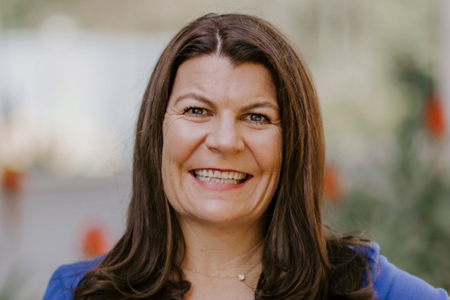
Last year, food insecurity in San Diego hit an eight-year high, with nearly 400,000 San Diegans experiencing food insecurity, says Kitagawa. “That’s 12% of our population, and it speaks to our model, and how our focus areas crossover. If a child doesn’t have food, he or she is not going to be able to thrive in school. And if education cannot be attained or maximized, that reduces economic opportunities.”
Kitagawa cited Feeding San Diego as one of the nonprofit partners receiving funds from a “meet the moment” campaign last year that raised $320,000 to support “organizations on the ground, responding to cuts in federal funds.” Another partner, Monarch School, which serves students who are unhoused or housing instable, is “providing wraparound support, not just academic support for students, but helping families navigate housing insecurity and get back on their feet.” At the same time, Monarch School has “a really impressive graduation rate, where kids are thriving, getting through high school and going to college,” says Kitagawa. “That changes the trajectory of not just the students themselves, but their families as well.”
Life Science Cares’ educational efforts also help to build a pipeline for future life sciences industry workers, by taking students on manufacturing site visits and lab tours, and holding career panels. “We provide exposure so that local students can explore the different career pathways, and we also want to make sure that they see who’s working in life sciences, and that there’s a mirror … there are people [working in the industry] who have shared lived experiences, and we want them to know that,” says Kitagawa. “Just because they don’t have a neighbor who can get them a summer internship at a biotech, a career in this industry is not out of reach.”